


Back in 2018, in a factory outside Hangzhou, it was manufacturing what looked like a perfect ceramic candle holder. Smooth finish. Elegant matte coating. Packaging looked premium, too. The client approved the sample within 15 minutes.
Three weeks later, 18% of the shipment arrived cracked in a California warehouse because the supplier quietly downgraded the inner foam inserts to save a few cents per unit. That single decision cost the importer over $27,000 in refunds, replacement inventory, and emergency air freight.
And honestly? Situations like this are exactly why China Home Decor Inspection Services are no longer optional. They’re part of survival.
Especially now.
Factories are moving faster, margins are tighter, and many suppliers are under pressure to cut production costs wherever buyers aren’t watching closely. Home décor products are even riskier because they combine fragile materials, handmade finishes, coatings, textiles, glass, wood, ceramics, and packaging complexity all in one shipment.
Sounds manageable on paper. In reality, it’s chaos without local quality control.
At a Glance
- Home décor products have some of the highest hidden defect rates in China sourcing
- Packaging failures are still the #1 cause of damage claims
- The best protection is working with a local China sourcing company for home décor.
- Third-party inspectors help prevent supplier shortcuts before shipment
- Fast local intervention saves importers money, time, and customer trust
- Pre-shipment inspections in 2026 are far more detailed than basic visual checks
The Biggest Mistake Importers Still Make in 2026
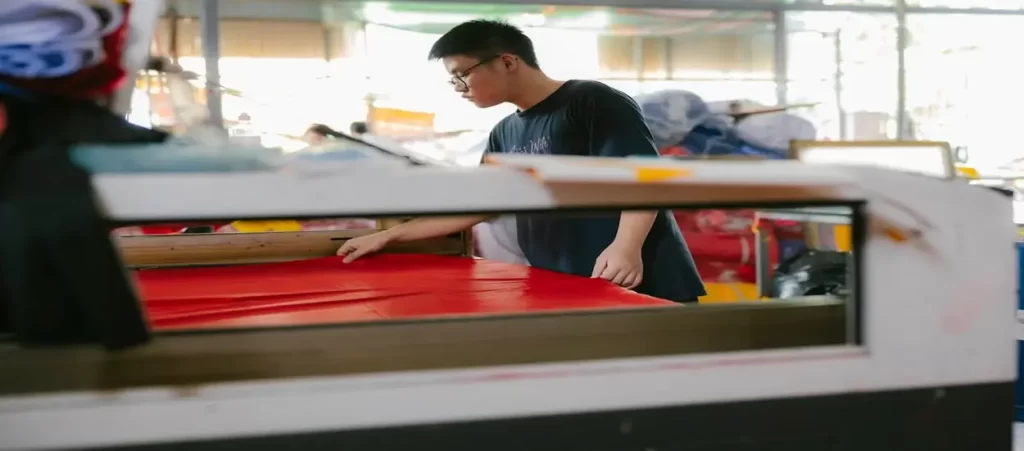
The funny thing is, most problems don’t start with “bad factories”. They start with good factories making bad decisions under pressure.
This is the part many first-time importers misunderstand. A supplier can produce excellent samples and still ship inconsistent mass production later. I’ve seen factories switch paint suppliers mid-production, reduce carton thickness without approval, or replace stainless steel hardware with cheaper alloys after the deposit clears.
And unless someone local catches it early, you usually discover the problem after the container lands. That’s why I always tell buyers that the smartest first move is working with experienced local sourcing teams or reliable third-party inspectors — preferably both.
A strong sourcing company in China doesn’t just inspect products. They coordinate with factories, pressure suppliers to fix issues quickly, negotiate corrective actions, and physically revisit production lines if necessary.
That local presence matters more than people realise.
At OwlSourcing, our Shanghai-based team has stepped into situations where clients were days away from loading defective products into containers. In one case involving decorative mirrors, we found severe packaging weakness during carton drop testing. The supplier insisted it was “normal export packaging”. It wasn’t.
We stopped shipment immediately. After reinforcement upgrades and revised corner protection, transit damage dropped from an estimated 14% risk rate to under 2%. That’s the difference between proactive QC and reactive damage control. And trust me, reactive damage control is always more expensive.
Why Home Décor Products Are a Different Animal
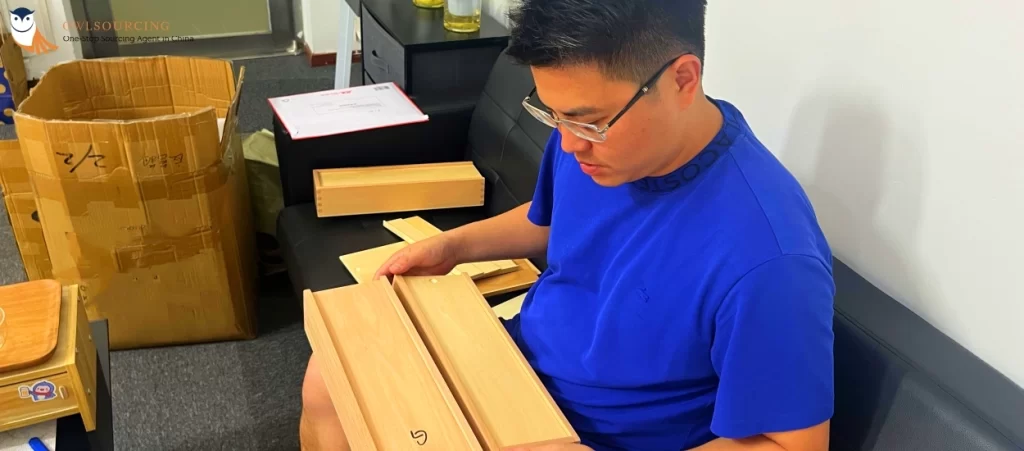
I’ve worked across electronics, hardware, furniture, and packaging categories. Home décor remains one of the most unpredictable industries for quality consistency.
Why?
Because aesthetics are subjective, and factories know buyers often focus heavily on appearance while overlooking structural or packaging issues.
- A candle holder may look perfect under factory lighting while hiding weak electroplating that starts oxidising 45 days later.
- A wall mirror might pass visual inspection but fail vibration stress during shipping.
- A wooden tray can develop moisture swelling after crossing the Pacific because the kiln-drying was rushed.
This is exactly why professional product inspection services in China have become much more technical in recent years.
Good inspectors today check far beyond surface appearance:
- Coating adhesion
- Paint consistency
- Carton compression strength
- Barcode accuracy
- Stability testing
- Moisture exposure risks
- Hardware quality
- Assembly tolerances
- Odor detection
- Packaging drop resistance
And yes, packaging deserves special attention. Most importers underestimate how brutal international shipping actually is. Containers experience vibration, stacking pressure, humidity swings, and rough handling across ports and warehouses.
Fragile home décor items suffer first.
That’s why experienced inspectors now spend serious time on packaging quality inspection in China, especially for ceramics, mirrors, candles, glass décor, and wall art.
Common Defect Severity Classification
| Defect Type | Severity Level | Example |
|---|---|---|
| Broken ceramic or glass | Critical | Cracked vase or shattered mirror |
| Exposed sharp metal edges | Critical | Unsafe candle holder edge |
| Mold or strong chemical odor | Critical | Mildew on bathroom décor |
| Electrical failure | Critical | Decorative lighting not functioning |
| Wrong product model | Major | Incorrect wall art design shipped |
| Large scratches or dents | Major | Visible furniture surface damage |
| Unstable structure | Major | Wobbly chair or shelf |
| Color inconsistency | Major | Different shades within the same batch |
| Poor paint or coating finish | Major | Bubbling or peeling surface |
| Missing accessories | Major | Missing screws or mounting kits |
| Minor surface dust | Minor | Easily removable marks |
| Small packaging wrinkles | Minor | Slight carton deformation |
| Tiny stitching variation | Minor | Small textile inconsistency |
| Small label misalignment | Minor | Slightly crooked barcode label |
Most professional Product Inspection Service in China providers also follow ANSI/ASQ Z1.4 sampling standards during inspections. Instead of checking every single unit, inspectors examine a statistically valid sample size from the production batch. This approach helps identify quality risks efficiently while keeping inspection costs reasonable.
Example ANSI/ASQ Sampling Process
| Order Quantity | Inspection Level | Sample Size |
|---|---|---|
| 500 pcs | General Level II | 80 pcs |
| 1,200 pcs | General Level II | 125 pcs |
| 3,200 pcs | General Level II | 200 pcs |
In most home décor inspections, inspectors apply standard AQL (Acceptable Quality Limit) thresholds to evaluate shipment quality.
Standard AQL Levels
| Defect Category | Typical AQL |
|---|---|
| Critical Defects | 0 |
| Major Defects | 2.5 |
| Minor Defects | 4.0 |
If detected defects exceed the acceptable limit, the shipment officially fails inspection, and corrective action is usually recommended before the cargo leaves the factory.
I’ve personally seen gorgeous products destroyed by cheap internal dividers worth less than $0.18 per unit. Imagine losing an entire retail season because someone tried saving 18 cents.
The Rise of “Quality Fade” Is Very Real
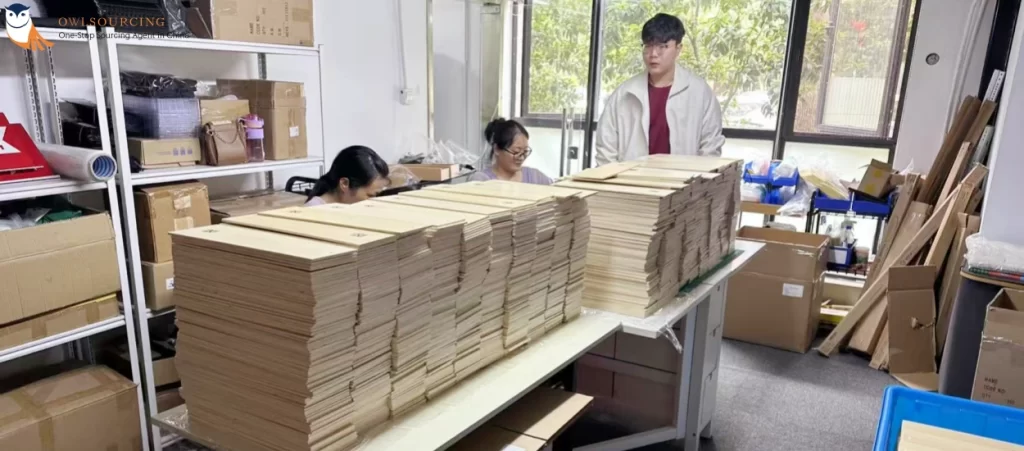
A few years ago, quality problems were easier to identify because many factories operated with relatively stable production systems. Today? Supplier behaviour changes fast.
One month, they’re overloaded with orders; the next, they’re not. The next month, they’re struggling with labour shortages. Raw material prices fluctuate constantly. Smaller factories, especially, feel enormous pressure.
This creates what many experienced importers now recognise as gradual quality erosion — something closely tied to “How to Prevent Factories from Quality Fade in China“.
It rarely happens dramatically. Instead, standards slowly slip:
- Slightly thinner metal
- Lower-density foam
- Inconsistent paint batches
- Weaker glue bonding
- Fewer QC staff on production lines
Individually, these issues may seem minor. Combined across a 5,000-piece shipment? They become catastrophic.
I worked with a U.S. home décor brand sourcing dining room accessories from Zhejiang. Their first three shipments were excellent. The fourth shipment looked acceptable initially, but customer complaints started appearing within weeks.
- Rust spots.
- Loose screws.
- Uneven coating.
We later discovered the factory had quietly outsourced part of production to a secondary workshop to meet delivery deadlines. Without local monitoring, nobody noticed until products reached consumers.
That’s why experienced importers now combine supplier sourcing with ongoing inspections instead of treating QC as a one-time event. And frankly, this is where experienced teams outperform random inspectors hired from online marketplaces.
A professional third-party quality inspection service provider in China should understand factory behaviour patterns — not just checklist execution. There’s a huge difference.
The Smartest Importers Focus on Prevention, Not Recovery
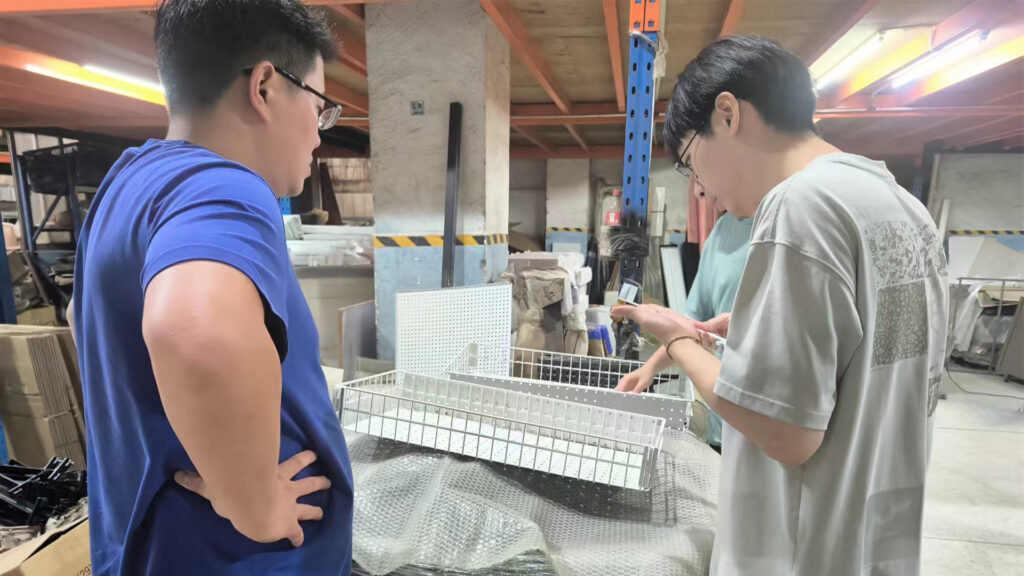
One of the biggest mindset shifts I’ve seen among successful importers is this: They stop treating inspections as an expense and start treating them as insurance. A proper pre-shipment inspection in China may cost a few hundred dollars. A defective container can cost tens of thousands. The math isn’t complicated.
Especially for Amazon sellers and retail brands where one bad shipment can trigger refunds, negative reviews, compliance issues, or inventory suspension.
In 2026, many importers are also combining inspections with broader supplier management strategies:
- Factory audits
- During-production inspections
- Compliance verification
- Consolidation checks
- Packaging optimization
- Supplier communication management
This is particularly important for buyers handling multiple suppliers under one shipment using China consolidation services. When products from several factories get merged into one container, quality inconsistency becomes even harder to control.
That’s why experienced importers increasingly rely on local sourcing partners who can oversee the entire process — not just isolated inspections. And honestly, that trend makes sense.
Because when problems happen in China, speed matters. A local team can visit factories immediately, verify corrective action, negotiate rework, and prevent shipment delays before they spiral into financial damage.
Remote buyers simply can’t react that quickly from overseas.
What Separates Great Importers From Average Ones
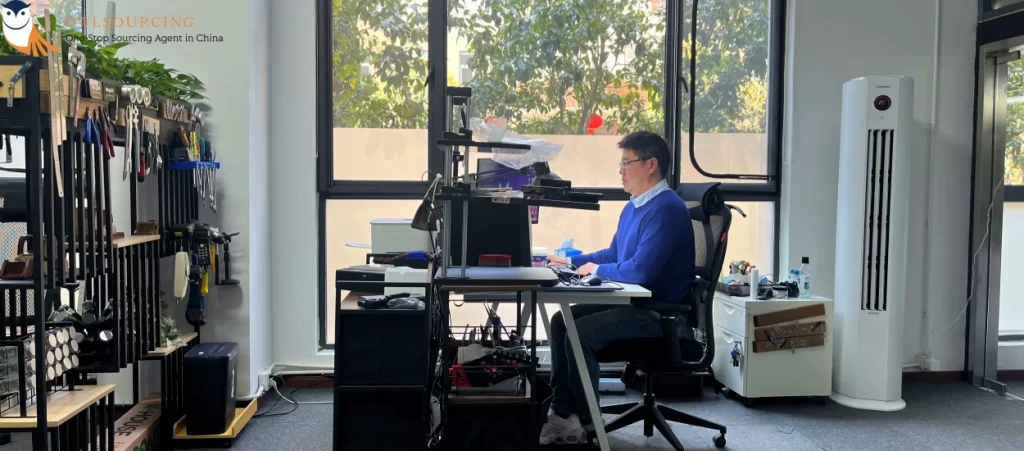
When I first entered this industry, I thought sourcing success came from negotiating lower prices. Now I know better. The best importers aren’t the ones who squeeze factories hardest. They’re the ones who build systems that reduce uncertainty.
That means finding reliable suppliers, monitoring production consistently, and using experienced local partners before problems become expensive. It also means understanding that quality control isn’t about mistrusting suppliers. It’s about verifying reality. Because in home décor manufacturing, small details create massive outcomes.
- A tiny crack.
- A weak carton.
- A wrong coating.
- A missing screw.
Those little details decide whether customers leave glowing reviews or demand refunds. And as someone who has spent over a decade inside Chinese factories, warehouses, and production lines, I can confidently say this:
The importers who win in 2026 are not necessarily the ones paying the lowest prices. They’re the ones building the strongest control systems around their supply chains.
That’s exactly why “China Home Decor Inspection Services” has become one of the smartest investments serious brands can make before a shipment ever leaves China.
FAQ
1. How much does a home decor inspection cost in China?
Home decor inspection costs in China usually range from $199 to $399 per man-day, depending on product complexity, factory location, and inspection scope.
2. What defects are common in home decor products?
Common defects include scratches, paint inconsistency, broken ceramics, unstable furniture structures, poor packaging, rust, glue marks, and incorrect dimensions.
3. When should PSI be done for home decor products?
Pre-shipment inspection (PSI) is usually conducted when 80–100% of production is completed, and at least 80% of goods are packed before shipment.
Read More:
- How Much Does Quality Inspection Cost in China?
- Best Amazon FBA Product Inspection in China
- China Manufacturing Cost Breakdown for Importers
- Why Quality Control is Important When Sourcing From China?