

What are the warranty and refund policies for doing business with Chinese suppliers? As previously indicated, many people who source products from China experience no warranties or refund issues with their purchases.
This issue arises for many importers who purchase goods from China. Your order arrives, but there’s a problem. Perhaps the products are of low quality or don’t match the sample.
You then attempt to get in touch with the supplier. You wait after sending an email. Days go by with still no response. You then send them a WhatsApp message. They don’t reply, but you can see their profile picture. They may even totally block you at times.
Regretfully, this occurs more frequently than you may imagine. It can be very challenging to get your money back if there isn’t a clear warranty or refund agreement. Therefore, it’s crucial to review these terms before placing your order, rather than after issues arise.
But how do you manage these Chinese suppliers?
In this post, we will cover warranties and refunds for goods sourced from China and how to ensure you get your refund from suppliers.
A warranty is a formal guarantee often included in purchase agreements, guaranteeing that goods meet quality standards when sold. Most of the time, defective items can be returned or exchanged within certain periods. A warranty period covers problems post-purchase. In Chinese, “warranty” is “保单” or “Bǎodān.”
Why are warranties and refunds important when buying from China?
Before we deep into this topic, I would like to ask you a question: “If you buy wholesale from China, do you always ask your suppliers for a warranty for the products?”

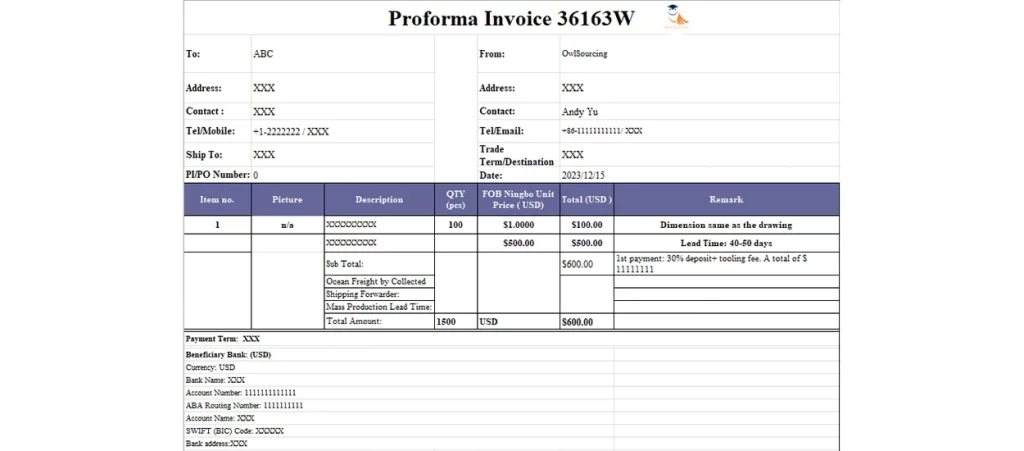
What others do not realise in the case of buying is the warranty and refund options. Some are not even aware of the Proforma Invoice (PI). Normally, information concerning product warranties is incorporated in the PI.
What is a Purchase Order and a Proforma Invoice?
A Purchase Order is a formal and binding agreement initiated by the buyer, while a Proforma Invoice is an initial bill or quote given by the seller, often used for customs and preliminary financial arrangements.
Differences between a purchase order and a proforma invoice

| Aspect | Purchase Order | Proforma Invoice |
| Purpose | A formal document issued by the buyer to the seller indicating the intent to purchase specified items. | A preliminary invoice issued by the seller to the buyer presents expected prices and terms for the sale. |
| Function | Details types, quantities, and agreed prices for products or services; a formal proposal to buy under stated terms. | Serves as an estimate or quote, outlining potential costs and terms; not a demand for payment. |
| Legally Binding Nature | Becomes a legally binding contract when accepted by the seller, outlining the buyer’s commitment to buy. | Not a legally binding contract; serves as a pre-sale document for estimating costs. |
| Role in Transaction | Initiates the buying process, indicating the buyer’s desire to purchase and under what terms. | Used for customs in international trade or as a preliminary bill of sale; assists in financial planning and securing financing. |
| Content and Details | Contains the purchase order number, buyer and seller details, description of goods or services, quantities, unit prices, total cost, etc. | Includes invoice number, products or services offered, unit prices, total charges, estimated taxes, etc., similar to a commercial invoice. |
| Financial Management | Critical for financial planning, budget management, and inventory control; authorises | Helps in financial forecasting and assessing potential expenditures; not typically used for inventory |
Understand What a Purchase Order and Proforma Invoice Can Do for You
- A Purchase Order (PO) acts as your official agreement with the supplier, detailing quantities, prices, and delivery timelines.
- A Proforma Invoice, on the other hand, is the actual quote of the supplier, typically utilised in pre-production planning of payment and shipping.

Why are “Purchase Order” and “Proforma Invoice” Important in Business?

1. Ensuring Clear Communication and Agreement
2. Streamlining the Procurement Process
3. Record Keeping and Auditing
4. Establishing Legal Protection
Note: Does a proforma invoice have legal binding power?
No! A proforma invoice does not have the legal binding power of a contract.
However, we still recommend that both the buyer and seller sign the proforma invoice because, in case of any issues with the transaction, this document can still serve as important evidence of the transaction.
Components of a Purchase Order and a Proforma Invoice

1. Key Elements of a Purchase Order
A Purchase Order (PO) typically contains the following key elements:
- Purchase Order Number: A unique identifier for tracking and reference purposes.
- Buyer’s Information: Name, address, and contact details of the company or individual making the purchase.
- Seller’s Information: Name, address, and contact details of the company or individual providing the goods or services.
- Date of Issue: The date when this purchase order was created.
- Description of Goods or Services: Detailed list of items being purchased, including product code.
- Quantity: The number of units of each item being purchased.
- Price per Unit: The cost of each item.
- Total Cost: The total amount to be paid, including a breakdown of taxes.
- Delivery Date: Expected date or time frame for the delivery of goods or services.
- Shipping Method and Costs: Details about how the items will be delivered and the associated costs.
- Additional Terms and Conditions: Any other specific terms or conditions agreed upon by both parties.
2. Essential Information in a Proforma Invoice
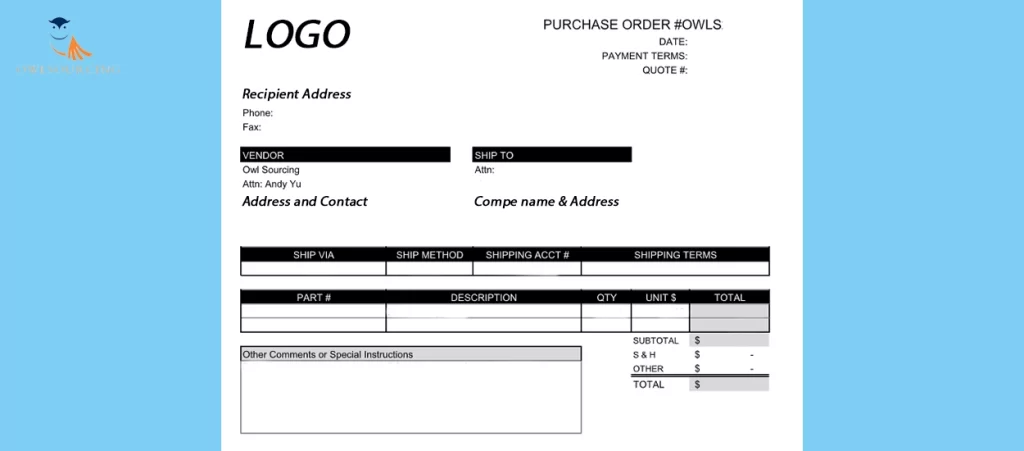
A Proforma Invoice generally includes the following essential information:
- Proforma Invoice Number: A unique number for identification.
- Seller’s Information: Name, address, and contact details of the entity issuing the invoice.
- Buyer’s Information: Name, address, and contact details of the entity to whom the invoice is issued.
- Date of Issue: The date when the invoice was generated.
- Description of Goods or Services: Detailed list of items being offered, including quantity and price.
- Total Value: The total estimated price of the goods or services, including taxes and additional charges.
- Delivery Terms: Terms under which the goods will be delivered (often referenced by Incoterms like FOB, CIF, etc.). For further information, read this article: Basic Trade Terms Alibaba Incoterms
- Validity Period: The time period for which the proforma invoice is valid.
- Bank Details: Information for payment, if bank transfer is a mode of payment.
- Additional Information: Any other relevant details, such as warranty, quality certifications, or special instructions.
How to Create a Purchase Order and a Proforma Invoice (Using Templates)?

Creating Purchase Orders and Proforma Invoices doesn’t have to be a complex process. With the help of templates and tools available, you can efficiently generate these documents. Here’s a basic step-by-step guide:
- Gather the necessary information: Collect all the relevant details, including buyer and seller information, item descriptions, quantities, pricing, and terms.
- Choose a template: Select a suitable template from the available resources or utilise software that offers pre-designed Purchase Order and Proforma Invoice templates.
- Input the details: Fill in the template with the gathered information, ensuring accuracy and clarity in every field.
- Review and finalise: Double-check all the details and ensure that all the necessary components are included. Once satisfied, save the document and share it with the respective party.
Can I get warranties when buying from China?

For instance, as mentioned earlier, many people, including Chinese suppliers, do not place much importance on warranties. Most Chinese suppliers will not offer you any guarantees.
Once you have paid the full amount for the products, these suppliers will not provide any warranty, nor will they cover the shipping costs for returns or accommodate requests for product replacements.
Unless you proactively inquire about warranties and refunds with Chinese suppliers. Even then, some suppliers may be unwilling to cover the shipping costs for returns.
They might only prepare replacement products for you. You may need to be prepared to handle the transportation costs for the products.
Note: However, communicating with Chinese suppliers about warranties and refunds requires relevant negotiation skills. There might be instances where some suppliers are unwilling to provide warranties for your products. In such cases, we may need to consider an alternative approach.
Warranty Policies and Refund Rights for China Sourcing
Finding a manufacturer in China is never an easy feat, let alone searching for an ideal supplier. This is because most Chinese suppliers are inclined not to monitor product quality sufficiently.
The first advantage of confirming warranties and refunds with Chinese suppliers in advance is to address quality assurance. At least, if you see the quality of the product as not as fine as you expected, you need not consume the product, but you have the right to demand your money back, plus other losses.
Remember, these documents can be customised based on your specific business needs and requirements. Utilising software or online tools designed for creating Purchase Orders and Proforma Invoices can simplify the process even further.
Warranties and refunds when buying from China set clear expectations for you and the supplier.
If you then indicate that your supplier has made products that are not of the right quality as agreed earlier. You can insist that they change the product or return your money, depending on the warranty policies they have set.
Tip: Before sourcing products from China, please verify Chinese suppliers’ legitimacy. This can avoid many issues related to suppliers. Please note that preventing a problem is more important than solving a problem.
Collaborating with Third-Party Warranties

If your supplier is unwilling to provide a warranty, you can also consider third-party warranty services. When issues like quality defects arise, these third-party warranties can assist you with warranty claims, and some even offer international warranty services.
However, there are also some downsides to third-party warranties. Below is a comparison of the pros and cons of third-party warranties.
| Pros and Cons of Third-Party Warranties | Pros | Cons |
| 1- | Third-party warranties are longer than those provided directly by the manufacturer of the goods or services. | The extent of work proved under a third-party warranty might not be as good as what an authorised manufacturer’s centre would offer. |
| 2- | They may be cheaper than the long warranties given by producers. | Filing a warranty claim under a third-party warranty can sometimes be a little complicated as well as time-consuming. |
| 3- | Some third-party warranties, which may come with extra features such as coverage of accidental damage, may not be offered with regular warranties. |
Types of Warranties in Chinese Manufacturing
There are many types of warranties that company providing their manufactured goods to China offer to their clients, and include the following:
1. Quality Assurance Warranty
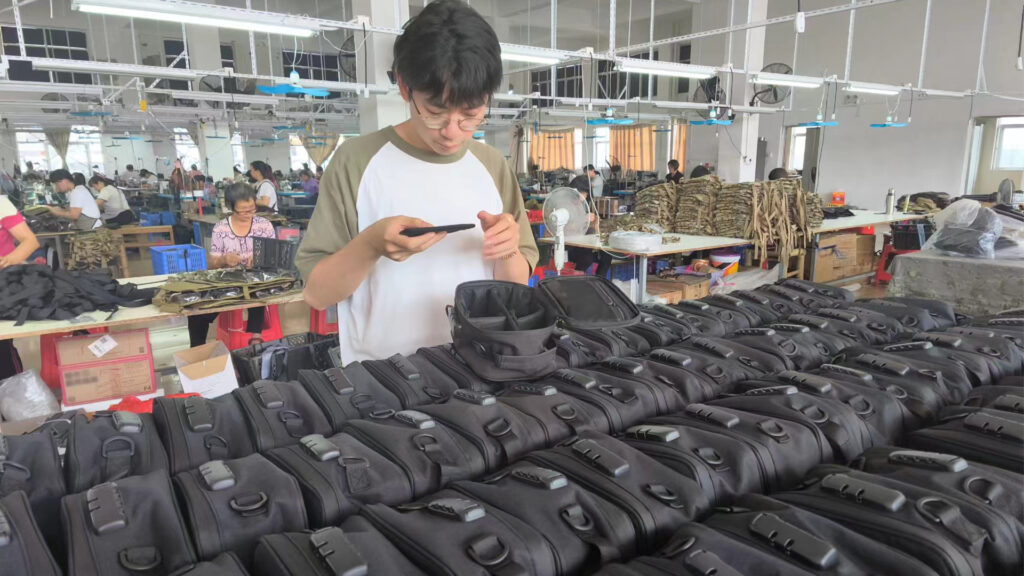
Quality is key to a product. If the supplier you have identified is unable to supply quality products, then you should dismiss them immediately.
This warranty entitles you to ask the set supplier to provide a better product than the one you asked for in case you choose a supplier that offers a Quality Assurance Warranty. Check if all the products that the supplier delivers to your organisation meet your quality standards.
2. Money-Back Guarantee
When, after several trials, the supplier cannot offer a product that meets your expectations, you will be protected by this guarantee and have the opportunity to ask the supplier to give back your money.
Of course, no supplier would approve such a request since it would entail a huge cost loss on their side. They may attempt to lure you into reaching an agreement that is lower than what you are owed.
3. Extended Warranty
This type of warranty also shields your business when a supplier is unable to deliver products for an extended time, not to mention after the warranty period. However, one must understand that you have to pay extra charges for the service offered by the firm.

Tip: Extended Warranty Coverage: Is It Worth It?
Whether to extend the warranty period should depend on the specific needs of the product. We have listed the advantages and disadvantages of extending the warranty for your reference:
Advantages of Extended Warranty Coverage,
- It provides additional protection beyond the standard warranty period, which can be reassuring, especially for expensive or essential items.
- Handling repairs or replacements through the warranty can be more convenient than finding a service provider yourself.
Disadvantages of Extended Warranty Coverage,
- Extended warranties come at an extra cost, which sometimes can be significant relative to the product’s price.
Summing up, for high-end electronics, appliances, or items prone to breakdowns, an extended warranty might be more beneficial.
If there have been numerous instances of quality or other issues with products in previous production batches, purchasing an extended warranty is indeed necessary, as you cannot guarantee that the same problems will not occur again in later production.
Can I get a refund during the warranty period?

If the confirmed warranty policy mentions refunds, of course, why not?
But you should also be aware that Chinese suppliers rarely agree to refund requests. For them, a single refund can lead to a decrease in their revenue.
They will find many reasons to reject your request. Perhaps the discrepancy arises from a lack of detailed confirmation of product specifications, leading to a mismatch between the product you need and the quality of the product they produce.

In summary, expecting a refund from Chinese suppliers is not easy. If you are confident that you have thoroughly communicated with the supplier before discovering any product issues, you might be able to confront the supplier by seeking legal assistance.
Is there no other way to protect your business if the supplier refuses a refund? My answer is: No! If the supplier infringes upon your interests, please use the correct channels to complain or report them!
Owlsourcing Action,
“Our team members meticulously inspect the quality and specifications of each product.”

How to initiate and navigate warranty claims with Chinese suppliers?
Even if you have established Warranties and Refunds When Buying From China with your supplier, it still does not guarantee that you will successfully receive satisfactory products.
Don’t worry, this article provides you with negotiation skills and points to consider when dealing with Chinese suppliers.
Step 1: Review the Warranty Terms
Carefully review the warranty terms provided by the supplier. Know what is covered and for how long.
Ensure you have all relevant documents, such as the purchase order, contract, warranty statement, and any correspondence regarding product quality issues.
Step 2: Gather Evidence

Take clear photos or videos of the defect or issue.
Step 3: Communicate with the Supplier
Reach out to the supplier through the designated channel (email, a trade platform messaging system, etc.). Be clear and concise in your communication. Use simple language to avoid misunderstandings.
Actually, there is a common approach in our work. For example, you initially purchase 500 units from a supplier, but find that 200 of these have quality issues. At the same time, you require a new order. You can send an email to the supplier:

“I am ready to place another order for 500 units, but I discovered quality issues with 200 units in the first order. So please replace the 200 defective products when you deliver the second order.”
On one hand, you receive products that meet quality standards, and on the other, the supplier does not lose any money. Additionally, they secure a new order. They are often very willing to replace the products for you.
Step 4: Negotiate a Resolution
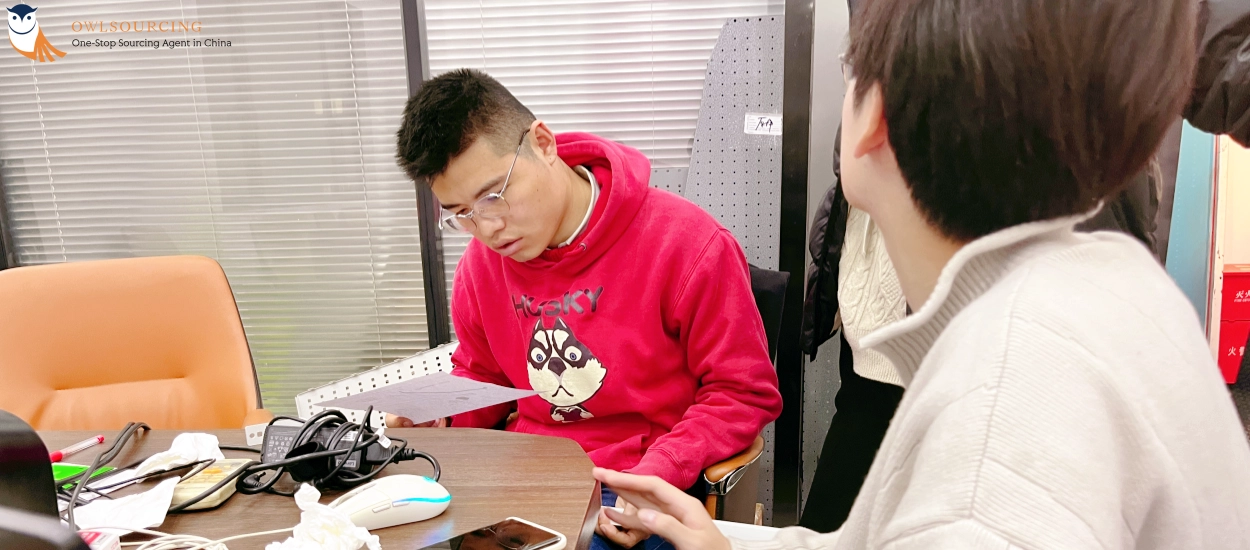
Be open to different forms of resolution, such as repair, replacement, or refund.
Step 5: Keep Records
Keep records of all communications, agreements, and resolutions. This step prevents the supplier from potentially questioning you in the future when you may not have a corresponding solution.
But please be sure to note that you do not pay the full amount until you have confirmed that the supplier can provide product information that satisfies you! Otherwise, you will not be able to get your money back from the Chinese supplier!
What to do if the supplier refuses to refund?
This situation often occurs. When suppliers receive all the funds and then refuse to take responsibility for the product, even if you argue with them about holding the warranty.
They might not care and may refuse requests for product replacements or refunds. For this, I offer the most appropriate solution: Use Chinese law to sue the supplier.
A) Complain to the Chinese embassy or consulate in your country
You can file a complaint with the Chinese embassy. They are an agency from the Chinese government and have the authority to pass your complaint to the relevant legal departments in China. They can assist in mediating your disputes with Chinese suppliers regarding warranties and refunds.
B) Report to local business associations in China
If you discover that the supplier is a member of a Chinese trade association, you can complain about this Chinese supplier to these organisations.
There are many chambers of commerce in China. You can find the names and contact information of the chambers you need in the list of Chambers of Commerce in China.
Some suppliers fear that business disputes could lead to their expulsion from the association, which would affect their market reputation.
Even more so, some suppliers pay to join these organisations, and being expelled would be an even greater loss for them.
C) Legal proceedings

I believe this is the most effective method.
In China, the law will be your best weapon. You can wield this “weapon” to defend your legal rights. Of course, you may not be familiar with Chinese law. Don’t worry, you can consider hiring a lawyer to file a lawsuit on your behalf.
In fact, not all products are worth this effort, as suing a company in China involves additional costs and time. You also need to consider the impact of the lawsuit on your business.
Owlsourcing can also assist you in negotiating with these suppliers. Helping you defend your rights and recover your money.
Tip: Owlsourcing helps you buy from China.
With extensive purchasing experience and supplier verification skills, Owlsourcing helps you obtain high-quality products at the lowest prices. We also conduct multiple on-site quality inspections during production. Of course, we will provide you with comprehensive information, including warranties, factory inspection reports, and other materials. Owlsourcing ensures the smooth operation of your business.
D) Filing a Dispute on Online Platforms
This approach is limited to B2B online platforms like Alibaba.
Does Alibaba Offer a Warranty?
You can add warranty protection when you buy a product from Alibaba for added peace of mind. In fact, most items in almost all categories on Alibaba can be covered by warranty.
Moreover, Alibaba’s Trade Assurance program protects against shipping or quality-related problems.
In case you need a refund, the process normally begins with a refund application. After approval, Alibaba normally takes seven business days to effect the refund. However, it may take some more time depending on your payment method:
- Credit Card: It may take up to 10 business days for the refund to be reflected in your account.
Is There a Money-Back Guarantee on Alibaba?
Yes, Alibaba has a secure payment method to help ensure your purchase is protected. In case you have any problems with your order, you can apply for a refund within 30 days after receiving your product.
Pro Tip: Alibaba’s support team is always there to guide you through the production process and even up to 30 days after delivery of your products.
“Guarantee on Alibaba” usually refers to various guarantee services provided on the Alibaba platform. In Chinese, “Guarantee on Alibaba” is “阿里巴巴保障服务.”
How to File a Dispute on Alibaba?
If you find a supplier on Alibaba but encounter a trade dispute with them, you can use Alibaba’s complaint platform to report it to Alibaba. Here is a guide to filing a complaint on Alibaba:
1. Go to the Alibaba website, where you can find the “Help Centre” at the top right corner of the page. Under its subcategories, you will find “Open a dispute“. Click on it.

2. On this page, you can fill out a form according to the type of trade dispute you have. There are three types of trade disputes listed:
Trade Assurance Order Dispute, Wholesale Order Dispute, and Other Trade Disputes.

3. Alibaba will contact the supplier immediately after confirming your complaint and assist in resolving issues related to warranties and refunds. If the supplier refuses to cooperate, Alibaba will impose appropriate penalties on the Chinese supplier.
However, this approach is only applicable to trade disputes that occur on B2B platforms like Alibaba.
Suppose your supplier is unresponsive and you decide against legal action to avoid extra costs, wishing instead to minimise losses.
Consider publicly sharing your experience on social platforms like Facebook, Twitter, Instagram, and TikTok. Detail how the supplier failed to meet your expectations or scammed you, which can provide a sense of resolution and alert others.
Do you know? In China, when a supplier deceives someone, it’s very common to share experiences with this supplier on social media as a warning to others.
Of course, in China, people typically post such incidents on “DouYin (抖音)“, which is known as TikTok internationally.
If this supplier has their own account and is still actively marketing, you can share your negative experiences with this supplier in the comments section. Express your dissatisfaction with this supplier and help prevent more people from being deceived.
Read More:
Final Thoughts
Warranties & Refunds When Buying From China can ensure that you still have the right to negotiate with suppliers after purchasing products. Please do not overlook its role in your business.
Many Chinese suppliers offer bad products, and you might not have the time to visit in person or lack the skills to contact Chinese manufacturers.
Contact Owlsourcing, where our professional team will conduct quality checks on your products, address issues promptly before they arise, and ensure the timely delivery of products while guaranteeing their quality. If you wish to contact us, please send an email to [email protected].
2 thoughts on “A Guide to Warranties and Refunds When Importing From China [Edition 2026]”
Clear explanations and useful tips. I’m wondering, how can I ensure the warranty terms are reliable, and what steps should I take if I need to request a refund? Any advice would be appreciated. Thanks for the helpful information!
Hello Robertson. Thank you very much for your recognition and questions!
Ensuring the reliability of warranty terms mainly involves reading and understanding the warranty terms in the contract in detail, and choosing a reputable supplier. Before signing a contract, you may consider consulting professional legal counsel to ensure that your rights and interests are fully protected.
If you need to apply for a refund, it is recommended to first communicate with the supplier according to the guidelines in the contract, and keep all relevant transaction and communication records. Hope these suggestions can help you. If you have more questions, feel free to ask.😊