
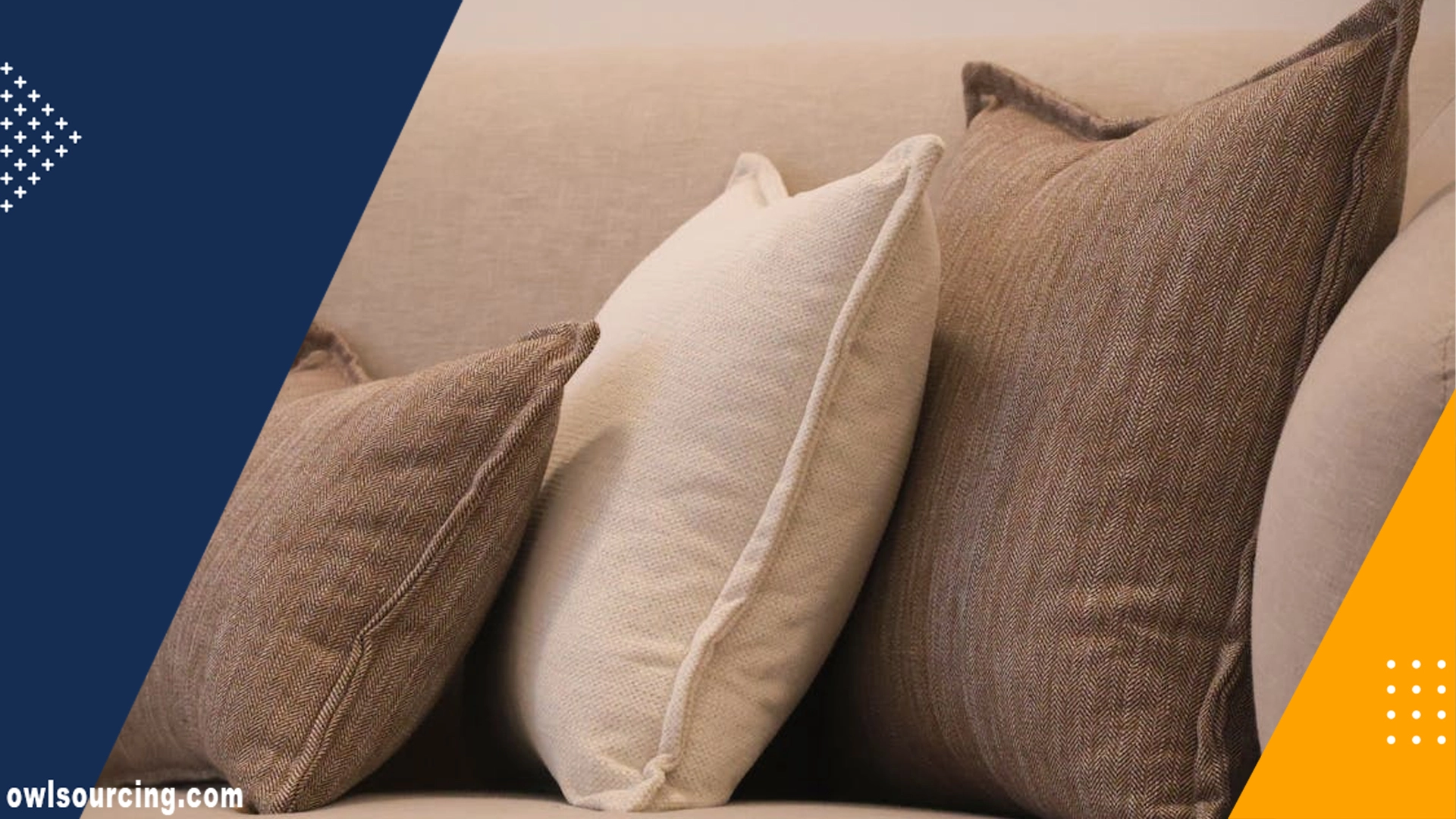

One of my bulk cushion cover orders I managed from Shanghai looked perfect during sampling. The velvet texture felt soft and dense. The concealed zipper moved smoothly. Colours matched the mood board almost exactly. I remember thinking this would probably become one of the easiest home décor categories to source.
At that stage, our team was already handling broader China Home Décor Sourcing Services projects across multiple product categories, so I assumed cushion covers would be relatively straightforward compared with furniture or fragile décor items.
I was wrong.
When the production shipment arrived weeks later, several cartons showed visible colour variation under retail lighting. Some zippers failed after basic testing. A portion of the vacuum-packed velvet covers never recovered their original texture properly.
That was the moment I realised cushion covers are not “simple textile products”. They are detail-sensitive products where small manufacturing shortcuts quietly destroy margins.
After years of working with factories across Zhejiang and Guangdong, I’ve seen the same problems repeat constantly during cushion cover sourcing projects: GSM manipulation, print inconsistency, stitching defects, shrinkage issues, and packaging damage during shipping.
China cushion cover sourcing requires more than comparing factory prices. Importers must evaluate fabric GSM, zipper quality, print consistency, MOQ requirements, inspection standards, packaging methods, and shipping costs before production begins. Zhejiang and Guangdong remain the primary manufacturing hubs in 2026, but supplier selection alone does not guarantee success. Most profit loss comes from quality defects, inconsistent production batches, and preventable shipping damage discovered after goods arrive.
Most online sourcing guides barely discuss these operational risks. That is where importers usually lose money.
At a Glance
- Zhejiang and Guangdong remain the strongest regions for cushion cover manufacturing
- Velvet, polyester, linen blend, jacquard, and tufted covers all carry different sourcing risks
- Low MOQ production often increases quality inconsistency
- Digital printing defects become visible under retail lighting
- Vacuum compression frequently damages velvet and tufted fabrics
- OEM and private label cushion covers continue growing rapidly
- Inspection before shipment is critical for textile products
- FOB pricing changes heavily based on material, embroidery, and packaging
What is AQL Inspection: AQL (Acceptable Quality Limit) is an internationally recognized sampling method used to determine whether a production batch meets predefined quality requirements. Most home textile importers use AQL 2.5 for major defects and AQL 4.0 for minor defects. Instead of checking every unit, inspectors evaluate statistically selected samples and decide whether to accept or reject the shipment.
Best Cushion Cover Manufacturing Regions in China for 2026
Different regions specialise in different manufacturing strengths. Hangzhou remains one of the best locations for woven fabrics, jacquard production, and premium decorative textiles. Factories there generally produce stronger finishing quality and better fabric consistency for export markets.
Yiwu focuses more heavily on trend-based production and lower MOQ orders.
This works well for importers testing new collections or seasonal designs. The downside is that lower MOQ production sometimes creates more variation between production batches.
Guangdong is stronger for OEM manufacturing and customised packaging projects. Many factories there support private label development, barcode integration, woven labels, and coordinated home décor collections.
Importers sourcing premium decorative products usually compare suppliers from multiple regions before approving production.
Typical MOQ for Chinese Cushion Cover Suppliers

MOQ changes significantly depending on material type and production complexity. Basic polyester printed cushion covers usually start around 300 to 500 pieces per design. Velvet and jacquard products often require higher quantities because fabric sourcing and dyeing become more expensive.
Typical MOQ ranges often look like this:
| Cushion Cover Type | Typical MOQ | Average FOB Price |
|---|---|---|
| Polyester printed | 300–500 pcs | $0.80–1.50 |
| Velvet cushion covers | 500–1000 pcs | $1.80–3.00 |
| Linen blend covers | 500–1000 pcs | $2.00–4.00 |
| Embroidered covers | 800–1500 pcs | $3.00–6.00 |
| Tufted cushion covers | 1000+ pcs | $4.00–8.00 |
Very low MOQ production can create operational problems.
Factories often combine multiple small orders during production. This increases risks involving fabric inconsistency, delayed timelines, and stitching variation between cartons.
For textile sourcing, lower MOQ rarely means lower risk.
Velvet vs Polyester vs Linen Cushion Covers
Material selection influences nearly every part of the sourcing process. Not just pricing. Different fabrics affect durability, shrinkage rate, print clarity, packaging performance, and customer perception.
Polyester cushion covers dominate mass-market retail because they remain affordable and stable during shipping. They also resist shrinkage better than natural fibres.
Velvet works differently. High-density velvet creates stronger visual value and supports premium retail pricing. However, lower-density velvet frequently develops pressure marks after vacuum packaging.
This issue becomes common during container shipping. Linen blends cover attractive boutique and Scandinavian-style retailers because of their softer, natural appearance. The challenge is consistency. Linen percentage variations between production batches often change the texture and fabric weight noticeably.
There is also a major difference between woven and printed cushion covers.
Woven designs usually maintain better long-term durability because patterns become part of the fabric itself. Digitally printed covers allow faster customisation and lower MOQs, but lower-grade dye quality increases fading risk over time.
For hotel projects and luxury interiors, embroidered and jacquard covers generally perform better because they maintain texture depth after repeated cleaning cycles.
OEM & Private Label Cushion Covers in China
Private label demand has increased sharply during the last few years. Many importers now want custom sizing, branded packaging, woven labels, insert cards, and exclusive fabric patterns instead of standard catalogue products.
OEM production usually includes:
- custom dimensions
- zipper selection
- embroidery development
- woven labels
- branded packaging
- barcode stickers
- vacuum packaging customization
Factories in Guangdong and Zhejiang generally handle OEM projects more efficiently because they already support broader home décor export programmes.
For growing brands, packaging quality becomes extremely important. Poor folding methods, weak polybags, or aggressive vacuum compression can damage premium-looking products before they even reach warehouse shelves.
That is why many importers now invest more heavily in China’s custom packaging solutions during production planning.
Common Cushion Cover Defects During Inspection
Most textile problems become visible only during bulk inspection. Approved samples rarely reveal what actually happens during mass production. The most common cushion cover defects I see include:
Uneven stitching
Weak thread tension creates inconsistent seams and early tearing around corners.
Concealed zipper failure
Lower-grade zipper replacements frequently appear during bulk production runs.
Print misalignment
Digital printing sometimes shifts slightly during high-volume production.
Seam puckering
Poor sewing tension causes wrinkled seam lines around edges.
Loose threads
Mass production speed often reduces finishing quality control.
Fabric odor
Low-quality dyes and improper storage conditions occasionally create strong chemical smells.
Shrinkage problems
Cotton-heavy and linen-blend fabrics sometimes shrink noticeably after washing.
Color inconsistency
Different dye lots may produce visible shade variation between cartons.
Textile inspection becomes especially important for velvet, jacquard, tufted, and embroidered cushion covers because defects are harder to correct after shipment.
Typical Cushion Cover Manufacturing Costs in China
Many importers underestimate how quickly costs change depending on material choice and finishing complexity. The fabric itself usually represents the largest cost component.
Embroidery, tufting, piping, invisible zippers, and custom packaging all increase production pricing significantly. A typical cost structure often includes:
- fabric sourcing
- cutting and sewing
- printing or embroidery
- zipper and accessories
- packaging
- carton loading
- inland logistics
Shipping volume also affects profitability heavily. Vacuum packaging reduces container space requirements, but excessive compression creates deformation risks for velvet and tufted products. Balancing shipping efficiency against product protection becomes extremely important for larger orders.
Alibaba vs Direct Factory Sourcing
Alibaba remains useful for initial supplier research and early sampling. Many importers still begin sourcing there because communication is fast, and supplier comparison becomes easier.
The challenge starts during production scaling. Some suppliers outsource sewing, printing, or embroidery work to secondary workshops during busy periods. This creates variation between approved samples and bulk manufacturing. That is why experienced buyers usually verify production capability carefully before placing larger orders. Especially for OEM or repeat-order programmes.
Read More:
- How to Import Home Décor from China
- Living Room Décor Sourcing from China
- Top Chinese Manufacturers of Custom Home Décor
- Top Wholesale Markets for Home Décor in China (Yiwu, Guangzhou, Foshan)
Final Thoughts!
The biggest sourcing mistakes in the cushion cover industry rarely come from dramatic factory scams. Most problems come from small operational compromises repeated during production.
- Lower GSM fabric.
- Weaker concealed zippers.
- Inconsistent stitching.
- Colour variation between dye lots.
- Over-compressed vacuum packaging.
Individually, these defects seem manageable. Together, they create returns, discounting pressure, delayed launches, and damaged customer trust. The suppliers that look cheapest during sampling often become the most expensive after containers arrive.
FAQ
1. What is the MOQ for cushion covers in China?
Most Chinese cushion cover suppliers start with around 300 to 500 pieces per design for polyester products. Velvet, jacquard, tufted, and embroidered cushion covers usually require higher MOQs because production complexity and fabric sourcing costs increase. OEM and fully customised orders often begin at 1000 pieces or more.
2. Are Chinese cushion cover suppliers reliable?
Many Chinese suppliers are reliable, especially factories with established export experience in Zhejiang and Guangdong. The main challenge is maintaining consistency between approved samples and bulk production.
Importers should verify production capability carefully and inspect orders before shipment, particularly for velvet, embroidered, or digitally printed products.
3. Which city is best for cushion cover manufacturing in China?
Different regions specialise in different strengths.
- Hangzhou is strong for premium fabrics and jacquard textiles
- Yiwu works well for lower MOQ and trend-based production
- Guangdong is better for OEM manufacturing and customised packaging
Most experienced importers compare suppliers across multiple regions before scaling production.
4. How much do custom cushion covers cost in China?
Pricing depends heavily on fabric, embroidery, printing method, MOQ, and packaging requirements.
Typical FOB pricing often looks like this:
- Polyester printed covers: $0.80–1.50
- Velvet cushion covers: $1.80–3.00
- Embroidered designs: $3.00–6.00
- Tufted premium covers: $4.00–8.00
Custom packaging, woven labels, and embroidery development increase production costs further.