
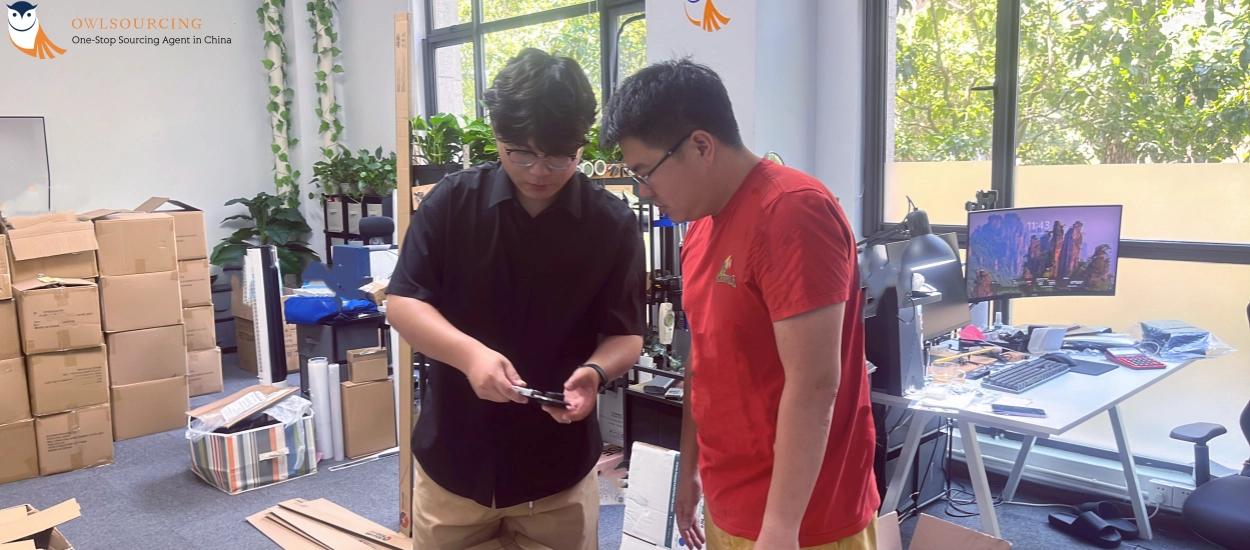

In this article, we aim to highlight the significance of quality control in China. Let’s start with a common, real-life scenario of most wholesale buyers in China.
Suppose this: You’ve acquired a good supplier in China, negotiated a good bargain, and are eagerly anticipating your first shipment. But when they arrive, the goods are riddled with defects, faulty components, irregular sizes, or worse yet, non-compliance with your domestic laws.
Suddenly, you’re facing thousands in returns, scathing customer reviews, and a tarnished brand. This nightmare, all too common for unprepared importers, is a stark reminder that quality control in importing from China is not optional.
QC is the backbone of a successful sourcing strategy. Without it, the cost savings of manufacturing in China can quickly turn into costly setbacks.
Best Practices for Effective Quality Control
Successful quality control for China sourcing is a systematic process to facilitate the supply of quality, consistent products. The best practices, based on industry standards and the experience of OwlSourcing, to help you achieve success are as follows:
1. Supplier Screening: The foundation of quality control is good supplier selection. All factories are not equal—some prioritise quality, while others cut corners. Verify supplier authenticity using:
- Certifications: Seek ISO 9001 or industry-specific certifications to ensure standardised processes.
- Background Checks: Verify business licenses, export history, and customer references to ensure credibility (Suppliers with predominantly U.S. or EU customers are likely to prioritise quality)
- Factory Audits: Assess facilities, equipment, and labour capabilities.
OwlSourcing conducts on-site audits, examining production capacity and quality systems. On-site factory visits reveal actual conditions, more than photos and videos on websites present. How else can you be certain of their accuracy?
For apparel, we check stitching and sizing; for electronics, we verify functionality. Our reports include photos, measurements, and defect rates, allowing you to address problems early.
2. Pre-Production Planning: Create clear specs—from materials to tolerances. Include diagrams or prototypes.
For electronics, specify battery life, safety features, and packaging requirements. OwlSourcing helps develop thorough specs, so suppliers are reading from the same page as you.
We also examine pre-production samples to confirm feasibility before large-scale production. This ensures material accuracy from the very beginning.
We helped a client coordinate suppliers to FDA-compliant kitchenware specifications.
3. In-Process Inspections: Identify problems before final assembly. For lighting, this saved a client the cost of redoing 300 faulty fixtures.
For instance, during furniture production, check wood quality and joinery before finishing.
OwlSourcing’s in-process inspections identify problems like incorrect materials or poor workmanship with time for correction before completion. This saved a client from purchasing lighting fixtures by redoing 300 faulty units.
4. Pre-Shipment Inspections: Final batch inspections utilising AQL, so there are no surprises.
OwlSourcing’s pre-shipment inspection uses statistical sampling (e.g., AQL standards) to arrive at defect rates, ensuring reliability. As a toy importer, we caught non-compliant labels, preventing a $10,000 recall.
Checklist for QC:
- Set standards against market norms.
- Audit and screen suppliers.
- Advance testing of samples.
- Stage-by-stage inspection planning.
- Document and regulatory checks.
Practical Steps to Implement Quality Control
Step 1: Define Requirements: Detail technical specs, material, size, and compliance standards (e.g., CE, FDA).
Step 2: Select Verified Suppliers: Filter production capacity and review past performance. We carry out virtual tours as needed.
Step 3: Schedule Inspections: Schedule pre-production, in-process, and pre-shipment inspections.
Step 4: Leverage Data-Driven Reports: Analyse defects, monitor KPIs, and improve processes. Our reports include photos, defect quantity, and recommendations.
Additional Tips:
- Always make a signed sample before mass production.
- Maintain open communication channels with suppliers.
- Modify your QC plan based on historical trends.
- Common Pitfalls and How OwlSourcing Addresses Them
Custom Quality Control Services at OwlSourcing
OwlSourcing addresses such issues through proper quality control services to fulfill importers’ specifications. Our China-based professional staff conducts systematic examinations, verifies supplier qualifications, and confirms conformity with international standards.
We help you determine proper product specifications like material, size, and performance needs based on ISO 9001 as a reference.
We also confirm adherence to certifications like FDA, CE, and RoHS to protect you from regulatory issues and legal breaches, especially when purchasing sensitive goods like kitchenware.
For instance, while procuring clothing, we ensure things like stitching quality and uniformity of the dye are properly specified.
A second great benefit of employing a China sourcing agent like OwlSourcing is the possibility to outsource difficult quality issues to professionals, since suppliers are often not cooperative in fixing quality issues.
We act as a mediator, smoothing working relationships. Our minute reports enable you to make wise decisions.
OwlSourcing ensures your products meet market standards for small or large orders.
We overcome common sourcing problems such as inconsistent manufacturing practices, language barriers, and inadequate on-site observation.
Our local inspectors, who are bilingual, use visual tools like sketches and prototypes to ensure your specifications are understood by suppliers.
Pre-production, in-process, and pre-shipment inspection is carried out by our local inspectors, and live reports complete with photos spare you the hassle of repeated foreign travel. We once saved a customer $5,000 for furniture by detecting surface blemishes early in production.
With a data-driven approach and expert audits, OwlSourcing redefines QC as a strategic advantage rather than a cost centre.
By partnering with us, you get access to local expertise, cost-effective inspections, and a commitment to excellence, allowing your sourcing experience to be seamless and successful. Contact us today!
In-House vs. Third-Party Quality Control
Choosing between in-house and third-party quality control impacts cost, objectivity, and scalability. The table below compares these options, followed by a comprehensive explanation.
| Aspect | In-House Inspection | Third-Party Inspection |
| Cost | Higher (travel, staff) | Lower (per inspection) |
| Objectivity | Risk of bias | Unbiased, professional |
| Expertise | Limited to team knowledge | Industry-specific experts |
| Scalability | Resource-intensive | Flexible, scalable |
Third-party inspections, like those offered by OwlSourcing, are more efficient. Costs are per inspection, typically a fraction of your travel expenses, making them ideal for small to medium businesses.
OwlSourcing’s inspections are conducted by unbiased professionals with industry-specific expertise, ensuring thorough and reliable assessments.
For example, when sourcing electronics, our inspectors test circuit boards, safety features, and packaging, catching issues your team might overlook. Third-party services are scalable, allowing you to inspect multiple orders across suppliers without straining your resources.
Our inspectors understand regional manufacturing practices and cultural nuances, providing accurate evaluations. For a furniture importer, we caught defective hinges during a pre-shipment check, saving $3,000 in returns.
Our reports include photos, videos, and defect data, giving you clear, actionable insights to address with your supplier.
FAQs: Your Questions About Quality Control Answered
- What are the common quality issues in China sourcing?
Defective materials, inconsistent production, and non-compliance with Western regulations are frequent issues. OwlSourcing’s inspections catch these early to prevent costly errors. - How much do third-party inspections cost?
Costs vary based on product complexity and inspection scope. Contact us for a detailed quote tailored to your needs. - How do I ensure compliance with international standards?
Verify supplier certifications, conduct audits, and use third-party inspectors like OwlSourcing to ensure adherence to FDA, CE, or other standards. - What’s the difference between quality control and assurance?
Quality control focuses on inspecting products for defects, while quality assurance improves processes to prevent defects. Both are critical for successful sourcing.
Read More:
- Quality Inspection for Pet Products in China
- How to Find a Reliable Sourcing Agent in China?
- Warranties & Refunds When Buying From China
- How to Import Toys from China
Final Thoughts
Improving the quality of Chinese imports is a wise investment that boosts competitiveness, consumer confidence, and financial prosperity. It releases expansion and reduces risk. OwlSourcing offers you expertly sourced solutions.
According to industry statistics, poor quality results in a 20–30% loss in margins from returns and lost sales. E-commerce brands are immobilised by negative reviews because 68% of consumers stop buying subpar products. Noncompliance will result in fines. These are avoided by QC, and third-party inspection lowers defects by 35%.
Travel expenses are eliminated by OwlSourcing’s site inspectors, and transparency is improved by our blockchain-based AI. Our relationship management holds suppliers responsible, and our reports help make informed decisions. To make QC affordable, we customise solutions for importers of all sizes.
Invest in QC to protect your bottom line and build confidence. Contact OwlSourcing to redefine your sourcing experience. Don’t let success be compromised by issues of quality—partner with us for a competitive edge.